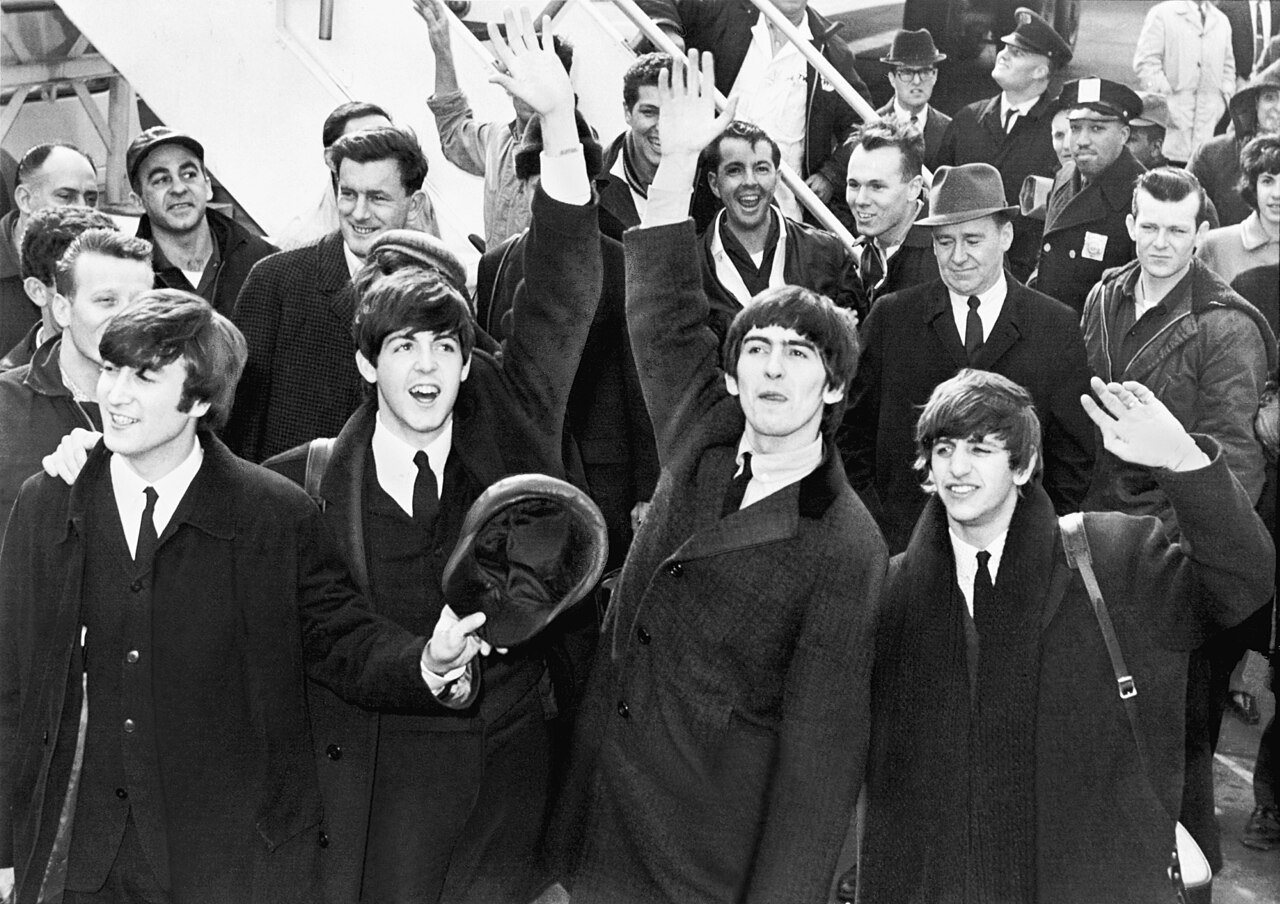
The Beatles arriving at JFK Airport, 7 February 1964
The Beatles · 1960–1970

The case for the songbook that rewired the century

John Lennon, Paul McCartney, George Harrison, Ringo Starr. Seven recording years. Seventeen British number-one singles. The argument is not that they were the heaviest. It is that almost everyone else — including Led Zeppelin — walked through a door they opened.

The opening statement

Popular music had hits before 1963. It did not have a four-person writing culture that could absorb Motown, string quartets, Indian drone, tape loops, and music-hall pastiche without becoming a variety act. The Beatles made the album the artwork, then made the studio the instrument, then left the road because the screaming had made concerts a pantomime.

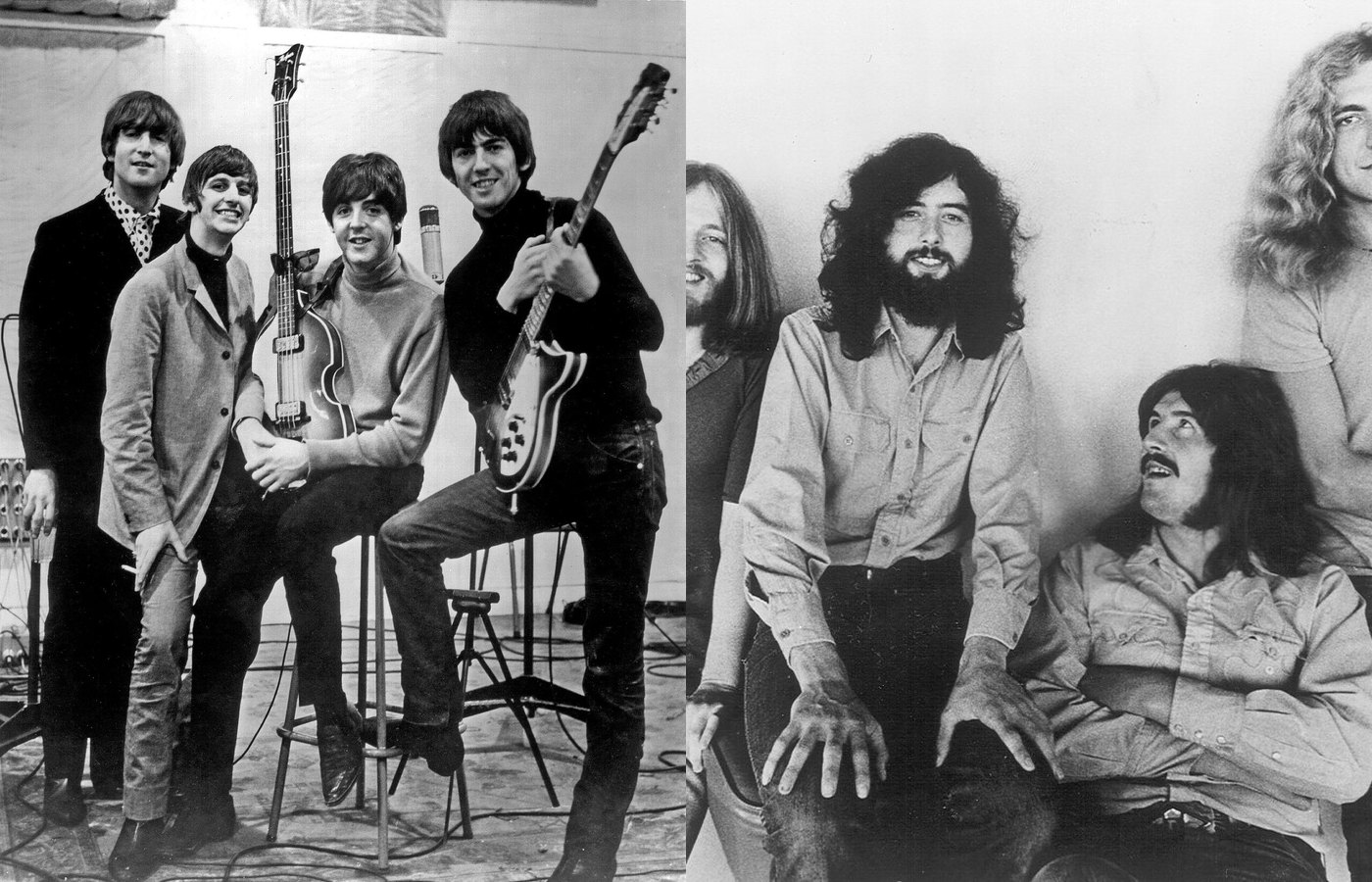
Led Zeppelin are the better live band and, player for player, the heavier musicians. That is not the whole trial. Reach, range, and the invention of rock-as-art still sit on this side of the table.

Bernard Gotfryd, Library of Congress. The night America saw them.

1960–1969

John Lennon

Voice, guitar, piano, the blade

Wit, bite, and the avant-garde impulse. Murdered 1980.

1960–1970

Paul McCartney

Voice, bass, piano, the architect

Melodic bass, medleys, and the instinct to finish.

1960–1970

George Harrison

Lead guitar, sitar, the late bloom

Something, While My Guitar, Here Comes the Sun. Died 2001.

1962–1970

Ringo Starr

Drums, feel, the human tempo

Song-first drumming. The backbeat that made the inventions land.

Five arguments, with exhibits

Exhibit 01

The numbers are not close

On every audited commercial scoreboard that treats music as a mass language — units, singles, number-one albums — the Beatles sit alone.

  • Estimated 600 million records worldwide versus Zeppelin's 200–300 million (Far Out, Wikipedia).
  • American certifications: about 183 million units, the highest of any act; Zeppelin about 111.5 million.
  • Twenty number-one singles on the American Billboard Hot 100 (the all-time record) and nineteen number-one albums on the American albums chart (also the record). Seventeen British number-one singles.
  • ChartMasters places Beatles equivalent album sales at 525.8 million — a gap larger than most rock catalogues entire.

Concession: Sales measure reach, not heat. Zeppelin did this with almost no singles strategy and a catalogue less than half as long.

Exhibit 02

Range is the hidden weapon

From Hamburg covers to string quartets, Indian drone, musique concrète, music-hall, proto-metal, and a Side B medley — no four-piece covered more ground without becoming a novelty act.

  • Norwegian Wood brings sitar into Western pop; Yesterday puts a quartet on a standard; Tomorrow Never Knows is tape-loop psychedelia.
  • Helter Skelter (1968) is routinely cited as a proto-metal blast years before Zeppelin I.
  • They absorbed skiffle, Motown, country, baroque, and the avant-garde inside seven recording years.
  • Three primary writers (Lennon, McCartney, then Harrison) is a structural advantage over one guitar-voice axis.

Concession: Breadth can look like restlessness. Zeppelin's narrower palette is also a form of integrity.

Exhibit 03

They turned the studio into an instrument

After they left the road in 1966, Abbey Road became the laboratory that every later album-band — including Zeppelin — inherited.

  • Artificial double tracking, backward tape, varispeed, close-miked drums, and the Sgt. Pepper orchestra glissando.
  • Strawberry Fields Forever is two takes in different keys and tempos edited into one song.
  • Sgt. Pepper is the first rock album to win the Grammy for Album of the Year (1968).
  • George Martin: they 'turned everything upside down and made a revolution.'

Concession: Zeppelin's Headley Grange recordings (especially When the Levee Breaks) are themselves a pinnacle of room-as-instrument.

Exhibit 04

They changed more than music

Beatlemania, Shea Stadium, the hair, the films, Apple Corps, and the idea that a pop group could speak for a generation are not extras. They are the brief.

  • Shea Stadium, 15 August 1965: 55,600 — the stadium-concert template.
  • Time listed them among the 20th century's 100 most important people.
  • Rolling Stone placed them first on its 2004 and 2011 greatest-artist lists.
  • Billboard: without those seven years, rock might not have become the century's defining popular force.

Concession: Zeppelin defined 1970s excess, FM radio, and the modern arena tour. Their cultural shadow is narrower but deeper inside rock itself.

Exhibit 05

The songbook travels further

Standards survive their makers. Yesterday, Something, In My Life, Let It Be, Eleanor Rigby, and Hey Jude are played by people who will never own a Marshall stack.

  • Hey Jude remains one of the defining communal choruses in popular music.
  • Something was praised by Frank Sinatra as a great modern love song.
  • Jazz, classical, soul, and film catalogues keep covering Beatles tunes as repertoire, not nostalgia.
  • The 1 compilation later sold more than 31 million — a songbook product Zeppelin never needed, and never had in the same way.

Concession: Stairway, Kashmir, and Whole Lotta Love are also repertoire — just a more specialized church.

A compressed timeline

  1. 1960

    Liverpool to Hamburg

    The working band is born. Night after night of covers forges the ensemble.

  2. 1963–64

    Beatlemania / Ed Sullivan

    Please Please Me through A Hard Day's Night. The British Invasion starts here.

  3. 1965

    Shea Stadium

    55,600 people. The stadium-concert idea, still mostly inaudible to the band.

  4. 1966

    Revolver, then they stop touring

    The last tour ends in San Francisco. The studio years begin.

  5. 1967

    Sgt. Pepper / Our World

    Album of the Year. All You Need Is Love broadcast to hundreds of millions.

  6. 1969

    Abbey Road meets Led Zeppelin I & II

    The only year both classic catalogues are fully alive. Two different futures of rock, same calendar.

  7. 1970

    Let It Be / the split

    McCartney's announcement ends the group. Solo centuries begin.

  8. 1988 / 1995

    Hall of Fame

    Beatles inducted first year eligible (1988). Zeppelin in 1995, with the 1970s-as-Beatles line attached.

What this side concedes

  • After 1966 they were not a live band in any serious sense. The late records win in rooms, not fields.
  • Ringo is a brilliant feel drummer, not a Bonham. McCartney is a brilliant bass melodist, not a Jones-level multi-instrumental arranger in the same way.
  • Some early covers and film-contract albums are journeyman work by later standards.
Billboard, 1 May 1965. Public domain advertisement.

From the archive

1964, in photographs

Beatlemania as it was shot — airports, television, and working stages.

Schiphol arrival. Anefo / Nationaal Archief, CC0.
Treslong, Hillegom. Anefo / Nationaal Archief, CC0.
Blokker veilinghal. Anefo / Nationaal Archief, CC0.
King's Hall, Belfast. PRONI.
On the road with Jimmie Nicol. Eric Koch.
Wellington, 21 June 1964. Archives New Zealand.

The studio run

1963

Please Please Me

I Saw Her Standing There / Twist and Shout

Mostly cut in one marathon session. Proof they could already write, cover, and out-sing the beat-group field.

1963

With the Beatles

All My Loving / It Won't Be Long

Second album in the same year. The cover-and-original mix that exported Merseybeat.

1964

A Hard Day's Night

A Hard Day's Night / And I Love Her

First all-original album. The movie made the band a visual language, not just a sound.

1964

Beatles for Sale

No Reply / I'll Follow the Sun

Tour fatigue on the sleeve. Folk and country shadows start to show.

1965

Help!

Yesterday / Ticket to Ride

Yesterday puts a string quartet on a pop single and changes what a 'Beatles song' can be.

1965

Rubber Soul

Norwegian Wood / In My Life

Sitar, adult lyrics, album coherence. Brian Wilson later called it a landmark that pushed Pet Sounds.

1966

Revolver

Eleanor Rigby / Tomorrow Never Knows

Tape loops, ADT, Indian drone, string octet. The studio becomes an instrument.

1967

Sgt. Pepper's Lonely Hearts Club Band

A Day in the Life / Lucy in the Sky

First rock Grammy Album of the Year. The album as a designed world, not a singles folder.

1967

Magical Mystery Tour

Strawberry Fields Forever / I Am the Walrus

American album collecting the year's most radical singles. Home-as-myth, tape as paint.

1968

The Beatles (White Album)

While My Guitar Gently Weeps / Helter Skelter / Blackbird

Thirty tracks, four writers colliding. Soft folk to proto-metal in one sleeve.

1969

Yellow Submarine

Hey Bulldog / It's All Too Much

Half soundtrack, half George Martin score. Still contains two late-period gems.

1969

Abbey Road

Something / Come Together / Side B medley

Their most finished record. Harrison arrives as a third great writer; the medley is pop's cathedral.

1970

Let It Be

Let It Be / The Long and Winding Road

Released after the split. The 2021 Get Back cut restored how much joy was still in the room.